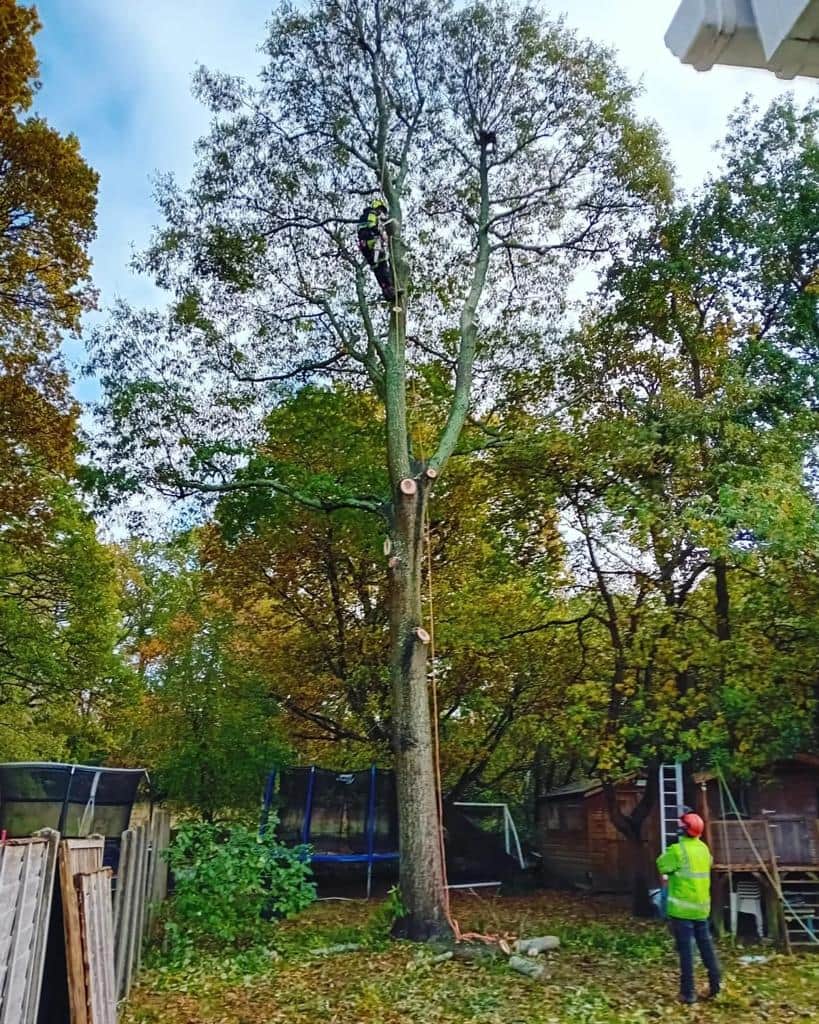
Trees are often regarded as stable, permanent features of a landscape, yet structural failure can develop gradually and without obvious warning. In Dorking, Surrey, mature trees are a common and valued part of many properties, but age, environmental stress, and past damage can sometimes place them at risk of collapse. Understanding the early signs and knowing how a professional arborist can intervene is essential for protecting both the tree and the surrounding area.
At NS Tree Surgery Dorking, we regularly assess trees where timely professional care can prevent failure and extend the tree’s safe lifespan.
Why Trees Become Structurally Unstable
Tree collapse rarely happens without cause. In most cases, instability develops over time due to a combination of factors that weaken the tree’s structure or anchoring.
Common contributors include:
- Decay within the trunk or major limbs
- Root damage or restricted root growth
- Imbalanced canopy weight
- Long-term exposure to strong winds or saturated ground
These issues may not be obvious from a distance, which is why professional assessment is so important.
Warning Signs That Should Not Be Ignored
While some problems are hidden, there are often visible indicators that a tree may be at risk. Leaning, cracking, or sudden changes in growth pattern can all suggest underlying instability.
Signs that warrant professional attention include:
- A noticeable lean that has developed recently
- Cracks or splits in the trunk or major branches
- Dead or dying limbs in the upper canopy
- Soil movement or lifting around the base of the tree
Early intervention at this stage can often prevent more serious outcomes.
How an Arborist Assesses Tree Stability
A professional arborist looks beyond surface appearance to understand how a tree is functioning structurally. This involves assessing the trunk, canopy, and root environment as a connected system.
An arborist will evaluate:
- The extent and location of decay
- Load distribution within the canopy
- Root stability and soil condition
- How the tree responds to environmental stress
This detailed approach allows informed decisions to be made about the most appropriate course of action.
Pruning to Reduce Risk and Restore Balance
In many cases, targeted pruning can significantly reduce the risk of collapse. By selectively reducing canopy weight or removing poorly supported limbs, an arborist can improve balance and reduce strain on weakened areas.
Correct pruning:
- Lowers wind resistance
- Reduces leverage on compromised sections
- Encourages healthier, more stable growth
When carried out professionally, this work strengthens the tree rather than weakening it.
Supporting Trees With Structural Issues
Where structural weakness is identified, an arborist may recommend supportive techniques to help stabilise the tree. These measures are designed to manage stress and allow the tree to continue growing safely.
The goal is always to preserve the tree where possible while ensuring it remains safe within its environment.
Protecting Roots and Improving Stability
Tree stability depends heavily on the condition of the root system. Soil compaction, drainage issues, or past disturbance can all reduce root effectiveness.
Professional arboricultural care considers the root zone carefully, helping to improve conditions that support anchorage and overall tree health. Addressing root-related issues often plays a key role in preventing failure.
Why Early Arborist Intervention Matters
The earlier a potential problem is identified, the more options are available to manage it effectively. Delaying assessment increases the risk that deterioration will progress beyond recovery.
At NS Tree Surgery Dorking, we focus on early, practical intervention for trees across Dorking, Surrey, helping property owners preserve valuable trees while maintaining safety.
Conclusion
A tree showing signs of instability does not automatically need to be removed. In many cases, professional arborist intervention can stabilise the tree, reduce risk, and extend its safe lifespan. Understanding the warning signs and acting early is the key to preventing collapse.
If you are concerned about the stability of a tree on your property in Dorking, Surrey, NS Tree Surgery Dorking can provide expert assessment and professional care. Timely arborist support can make the difference between losing a tree and preserving it safely for the future.
Call us on: 01306 776 298
Click here to find out more about NS Tree Surgery Dorking
Click here to complete our contact form and see how we can help with your tree needs.